Sold here
East and north
Culture day
- Length8 hours
- CoversQuarry, Tongariki, Anakena
- GuidesEnglish, Spanish
Your stop on the map
Answer in brief
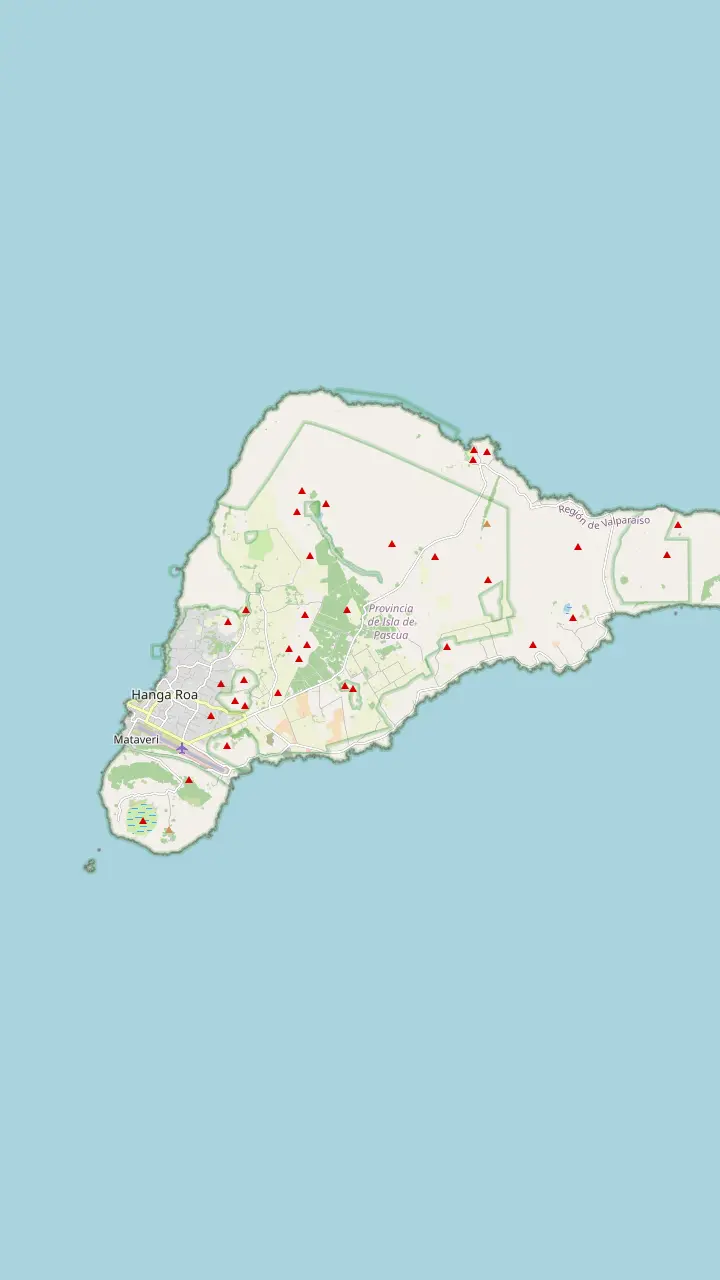
The main moai sites are Rano Raraku and Ahu Tongariki in the east, Te Pito Kura and Anakena on the north coast, Akahanga and Vinapu in the south, and Tahai and Ahu Akivi in the west.
Plan the route
Browse 20 stops
Start by picking a route; tap a pin or stop for its note and Google Maps.
The island's only town and the start of every tour; the airport sits beside it, and green turtles swim in the cove among the fishing boats.
Google MapsThree restored ahu and the remains of a village, steps from town; the park calls it one of the best places on the island for sunset.
Google MapsSeven moai that look out to sea, aligned with the sun at the equinoxes, the platform linked to the explorers of the founding story.
Google MapsThe red scoria quarry where most of the pukao topknots were carved; unfinished pieces still lie there.
Google MapsTwo monumental ahu with fitted basalt walls that the park compares to Inca stonework.
Google MapsAn old village site with one of the longest platforms on the island and eight toppled moai.
Google MapsVillage remains and toppled moai by the sea; the park links them to the civil wars of the 18th century.
Google MapsThe volcano where the moai were carved: the park counts 400 statues in every stage of work on its slopes and in its crater.
Google MapsThe largest platform on the island, 15 restored moai with their backs to the Pacific, and the classic sunrise spot.
Google MapsHome of Paro, the largest moai ever moved from the quarry, with its huge pukao.
Google MapsThe platform behind Anakena beach, whose moai still wear their red pukao.
Google MapsThe stone village of the birdman cult on the rim of Rano Kau, with Motu Kao Kao, Motu Iti and Motu Nui out in the sea below.
Google Maps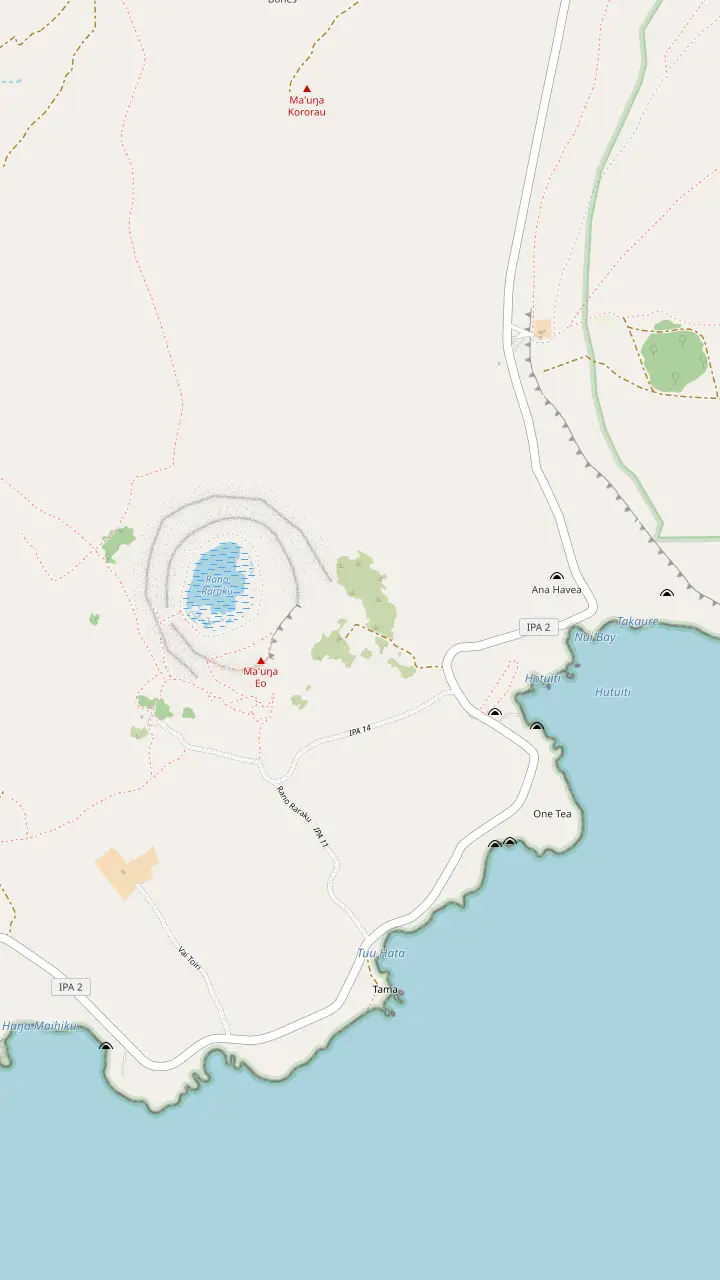
The volcano where the moai were carved: the park counts 400 statues in every stage of work on its slopes and in its crater.
Google MapsThe kneeling moai of Rano Raraku, also restored by Heyerdahl's team in 1955 and 1956.
Google MapsThe freshwater lagoon inside the Rano Raraku crater, reached on the walk past the half-buried heads.
Google MapsThe largest platform on the island, 15 restored moai with their backs to the Pacific, and the classic sunrise spot.
Google Maps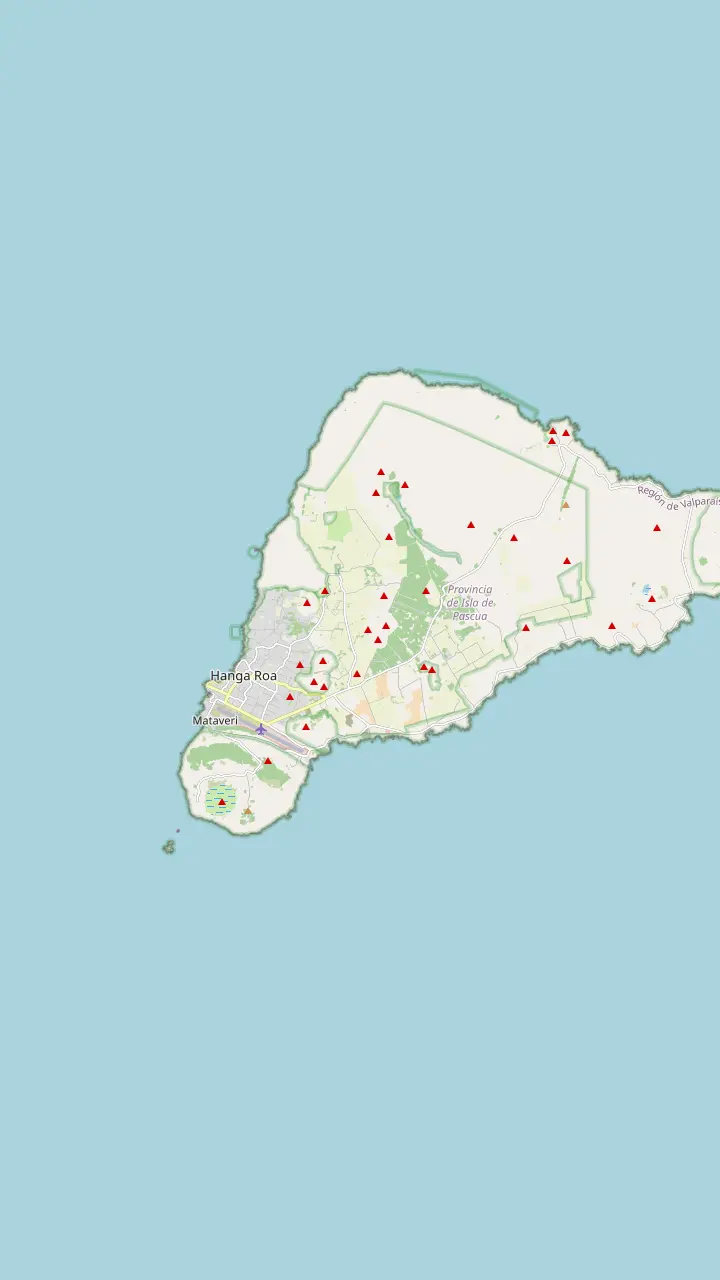
White coral sand and palms, and the place where oral tradition says King Hotu Matu'a came ashore.
Google MapsThe lone moai beside Anakena beach, raised again by Thor Heyerdahl's team in one of the first documented restorations.
Google MapsThe stone village of the birdman cult on the rim of Rano Kau, with Motu Kao Kao, Motu Iti and Motu Nui out in the sea below.
Google MapsOne of the islets off Orongo and the goal of the yearly race for the first manutara egg.
Google MapsThree restored ahu and the remains of a village, steps from town; the park calls it one of the best places on the island for sunset.
Google MapsThe anthropological museum named after the priest Sebastian Englert; the Moai Tau, returned from Santiago, is shown here.
Google MapsTwo monumental ahu with fitted basalt walls that the park compares to Inca stonework.
Google MapsThe island's only town and the start of every tour; the airport sits beside it, and green turtles swim in the cove among the fishing boats.
Google MapsMataveri International Airport, reached by the direct flight from Santiago of 5 hours and 30 minutes.
Google MapsThe small harbor where the Moai Tau was landed from a navy barge on its return in March.
Google MapsVillage remains and toppled moai by the sea; the park links them to the civil wars of the 18th century.
Google Maps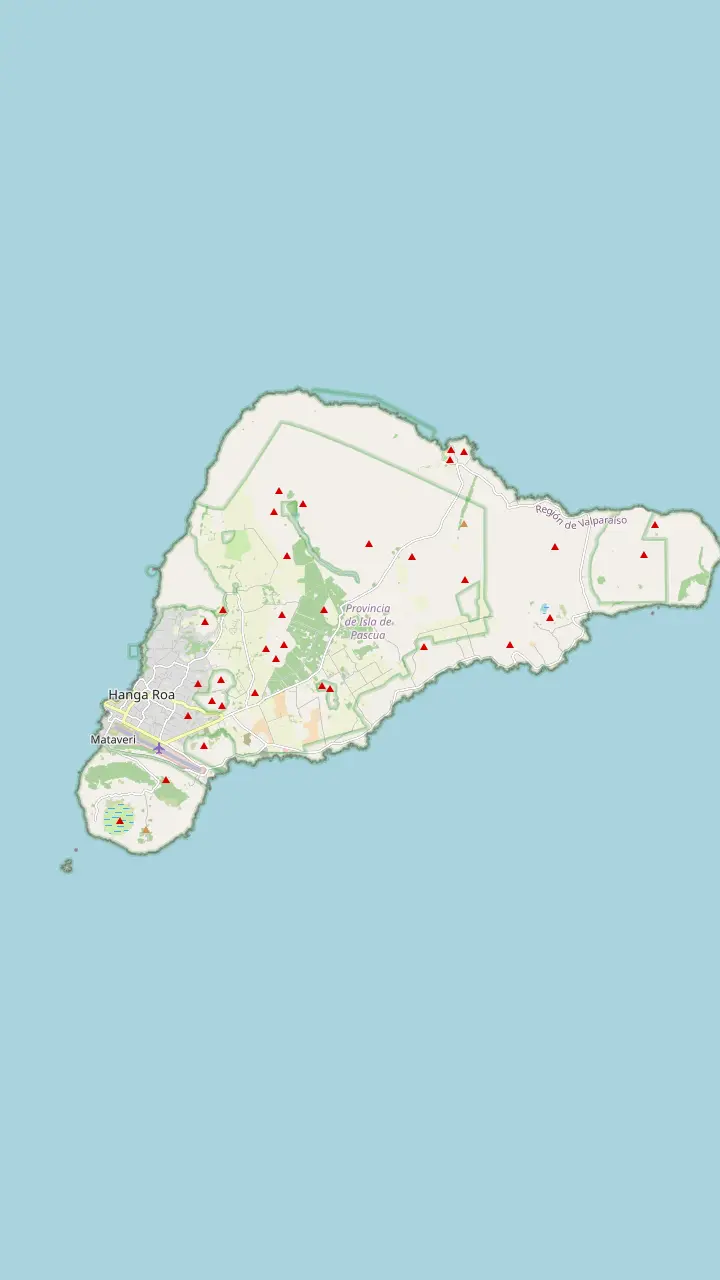
The largest platform on the island, 15 restored moai with their backs to the Pacific, and the classic sunrise spot.
Google MapsThree restored ahu and the remains of a village, steps from town; the park calls it one of the best places on the island for sunset.
Google MapsSeven moai that look out to sea, aligned with the sun at the equinoxes, the platform linked to the explorers of the founding story.
Google MapsThe island's only town and the start of every tour; the airport sits beside it, and green turtles swim in the cove among the fishing boats.
Google MapsThe volcano where the moai were carved: the park counts 400 statues in every stage of work on its slopes and in its crater.
Google MapsMap data: © OpenStreetMap contributors
The statues are spread around a small island, mostly on platforms near the shore. Use the map, then this guide, to see which sites belong together and which tour reaches each one.
Editorial team, easterislandtour.quest · Updated November 11, 2026 · Takes 7 min
If you are wondering where are the moai on Easter Island, the short answer is almost everywhere, but not evenly. By Chile Travel's figures the quarry at Rano Raraku holds 400 and the platforms 288, and the remainder are scattered elsewhere,5 and the main sites lie inside Rapa Nui National Park, which covers 6,908.06 hectares by CONAF's measure.6
Most platforms stand near the coast, with their statues facing inland toward the land of the clan that raised them; Chile Travel notes that most moai look toward the center of the island and that Ahu Akivi is the exception.7 That pattern makes the island easy to read by coast: a western group around Hanga Roa, the south coast road, the quarry and Tongariki in the east, and Anakena on the north shore.
Distances are short, roads are not always good. CONAF reports paved roads along the south coast and an excellent road from Hanga Roa straight to Anakena, while the north coast is reached mostly on dirt tracks,8 and Chile Travel describes a circuit of 154 km for those who rent a four-wheel drive.9 Every major site also needs a park ticket and an accredited guide.10
Site by site
| Site | What you see | Area | A tour that goes |
|---|---|---|---|
| Ahu Tahai | Three restored ahu | West, by town | Akivi and Tahai half day |
| Ahu Vinapu | Inca-like stone walls | South coast | Orongo to Ana Te Pahu |
| Akahanga | Toppled moai by the sea | South coast | Culture day |
| Rano Raraku | The quarry | East | Culture day |
| Ahu Tongariki | 15 restored moai | East | Culture day |
| Te Pito Kura | Paro, the largest moved | North | Culture day |
| Anakena | Moai with pukao, a beach | North | Culture day |
| Ahu Akivi | Seven moai facing the sea | Inland | Orongo to Ana Te Pahu |
| Orongo | The birdman village | Rano Kau | Orongo to Ana Te Pahu |
Descriptions from the park administration and Chile Travel; stops from the listings' itineraries.11,21,22,1,2,23,3,4,24
Start where you sleep. Hanga Roa is the only town, and in its cove green turtles swim among the fishing boats, according to Chile Travel.15 Just north of the center, the ceremonial complex of Tahai has three restored platforms and the remains of a village, and the park rates it among the best places on the island for sunset.11
Tahai is a good first stop for history too: the National Library dates its main platform to 713 AD, the oldest on the island,16 and the archaeologist William Mulloy led its restoration.17 It sits within walking distance of most lodgings, which makes it the easiest moai visit of the trip, ideal for the evening you land.
A few steps away, the island museum displays the Moai Tau, a basalt statue brought back from Santiago,13 and a complete moai eye, the biggest yet discovered, which turned up at Anakena in 1978.14 Seeing the eye before you visit the platforms helps you imagine how the statues looked when they still had their gaze.
Drive east from the airport and the south coast road passes some of the most evocative ruins on the island. At Vinapu the park describes two monumental ahu with basalt walls fitted in a style it compares to Inca work,21 and Chile Travel draws the same comparison.25 Heyerdahl's team restored a red scoria moai at Vinapu in its campaign of 1955 and 1956.26
Further east, Vaihu holds the site of an ancient village with one of the longest platforms on the island and eight toppled moai,18 and Akahanga shows village remains and statues lying where they fell by the sea, which the park links to the civil wars of the 18th century.22 Here you see the moai as they were left after their fall, rather than restored.
The culture day sold on this site follows this coast: after a traditional village it spends 45 minutes on a guided walk at Ahu Akahanga before heading on to the quarry. The visit is short but telling, because the toppled statues of the south coast make the restored rows of Tongariki and Anakena all the more striking later in the day.
Plan your route
Start with what you most want to stand in front of.
If I have a single full day
The east and north
The culture day covers the quarry, Tongariki, Te Pito Kura and Anakena.
If I want the birdman story
Orongo and the west
The 7-hour day adds Vinapu, Puna Pau and Akivi.
If I want a sunset with moai
Tahai
The park rates it among the best sunset spots.11
If I want moai and a swim
Anakena
Topknotted moai of Ahu Nau Nau stand behind a white beach.3
If I want moai facing the ocean
Ahu Akivi
The only platform whose statues look out to sea.4
Cover the island
Sold here
Culture day
The other half
Orongo to Ana Te Pahu
Sunset
Akivi and Tahai
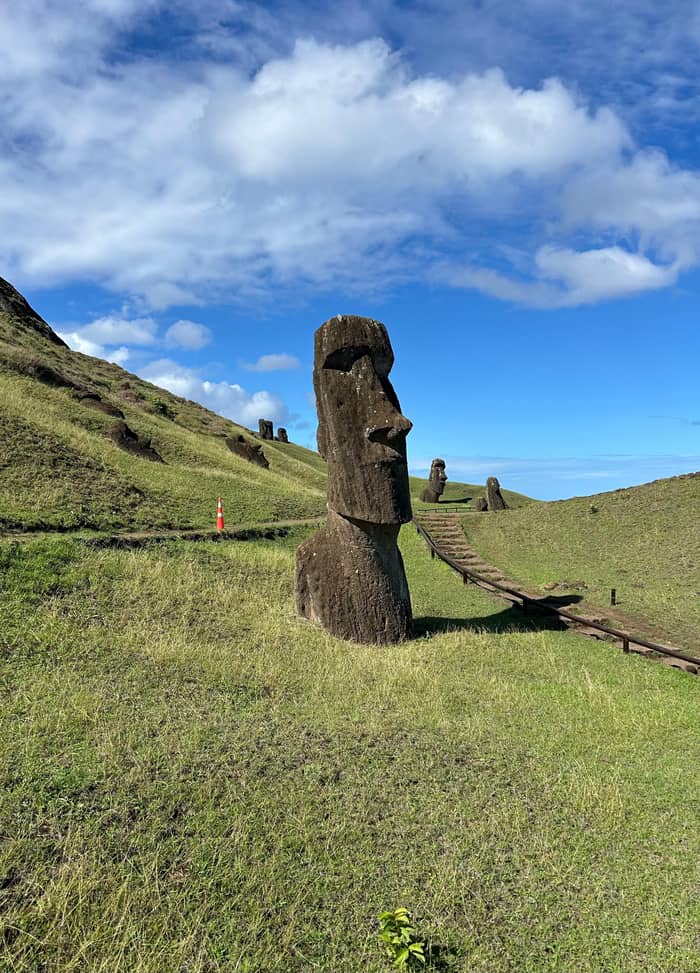
The south coast road ends at the island's two most famous sites. Rano Raraku, about 25 minutes or 18 km from Hanga Roa, is the quarry where the statues were carved,41 and the park counts 400 of them there in every stage of making, with a lake in its crater.1 Our page on the quarry covers it in depth.
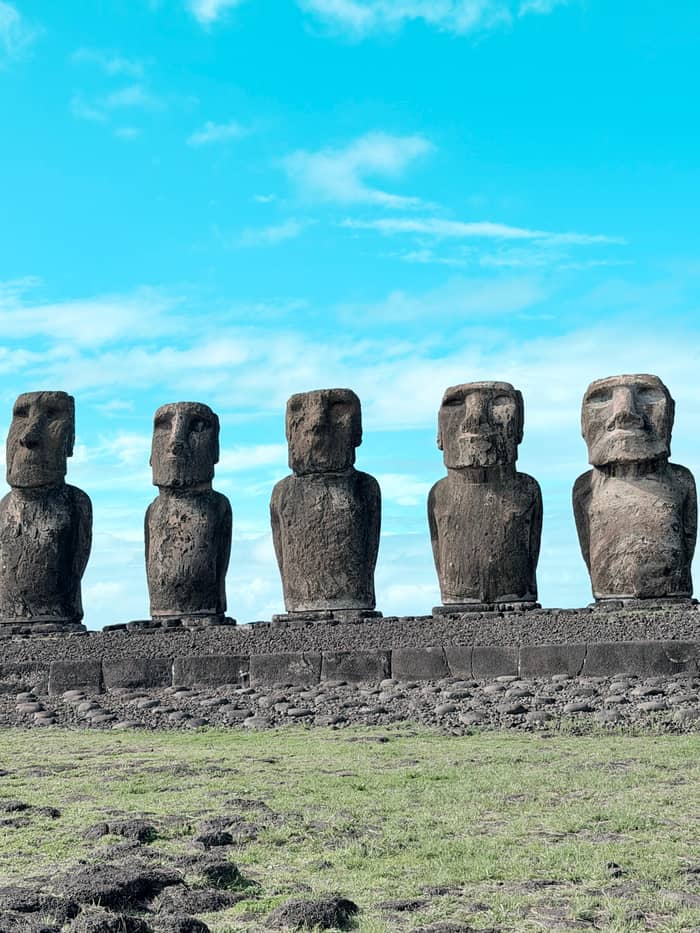
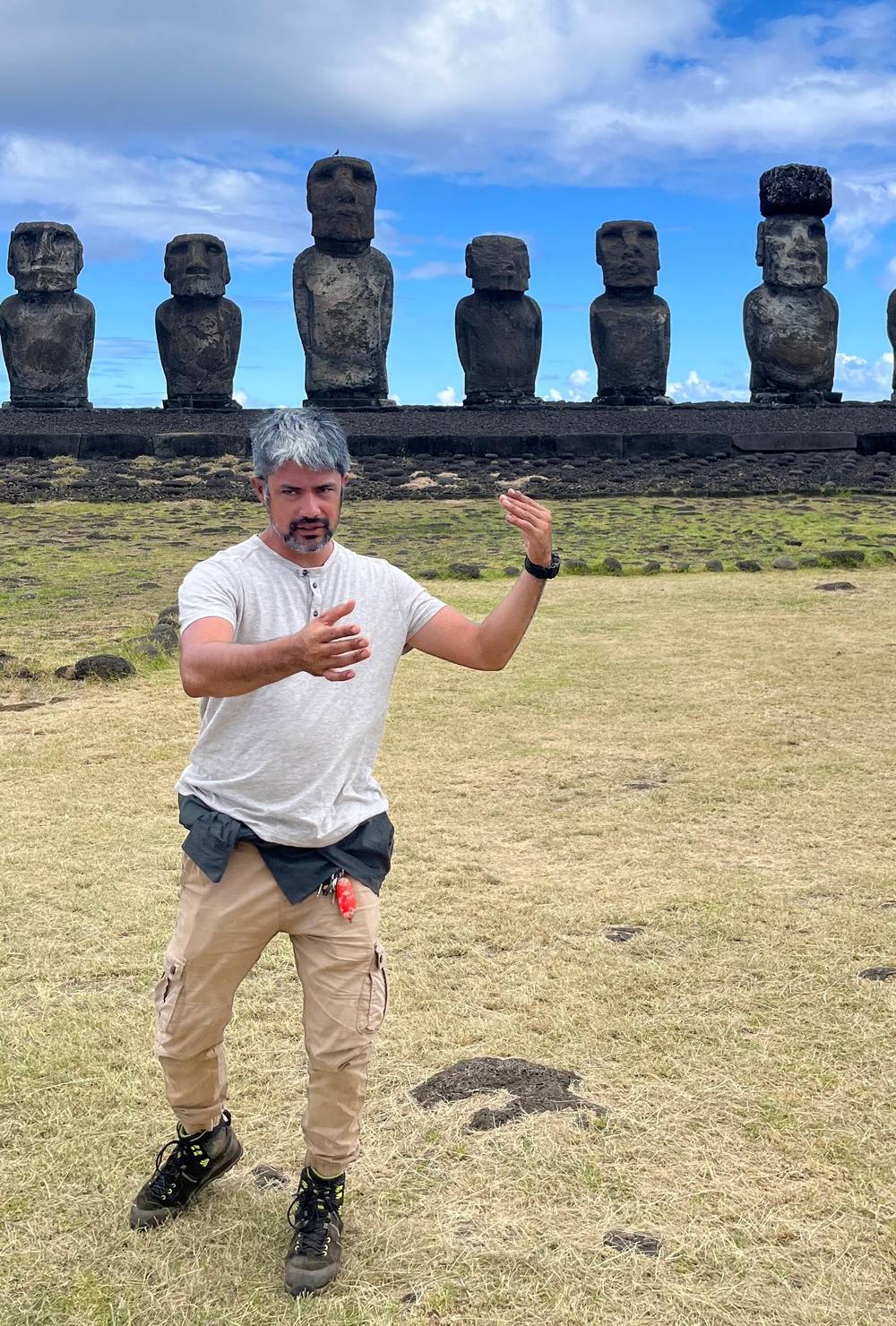
Below it, about a kilometer away on the bay of Hotu Iti, stand the fifteen moai of Ahu Tongariki,42 the biggest ahu of all and the classic place for sunrise.2 Rebuilt between 1992 and 1995 after a great wave scattered it in 1960, it is the best place to grasp how a full platform once looked; our sunrise page tells that story.43,44
Because the two sites are so close, east coast tours usually pair them. On the culture day booked through this site the quarry gets 1 hour on foot with the guide, and Tongariki 45 minutes, a stop the listing marks optional. Remember that your park ticket admits you to Rano Raraku only once,37 so choose a clear day for it.
Go with a guide
The shared tours that together reach every major site.
Compare all 3 options
The shared tours that together reach every major site.
≈
View≈
View≈
ViewStarting prices on GetYourGuide, exchanged at the ECB reference rate. The booking page gives the exact price.
A simple plan
Arrival evening
Walk from town to the three restored platforms for sunset.11
First day
Akahanga, Rano Raraku, Tongariki, Te Pito Kura and Anakena.
Second day
Orongo, Vinapu, Puna Pau, Ahu Akivi and Ana Te Pahu.
Third morning
Arrive about an hour before sunrise.12
Any day
On the way to the north shore, Ahu Te Pito Kura keeps Paro, the largest moai ever transported from the quarry, with a huge pukao.23 The national conservation center gives it a height of 10 meters and an estimated weight of 90 tons, the biggest statue ever placed on a platform.45 The culture day stops here for a guided walk of 45 minutes.
Anakena is where the day ends on many tours, and for good reason. The white beach, palms and calm water make it the island's favorite swimming spot, and Chile Travel describes it as the place where Hotu Matu'a landed in tradition.33 The Anakena beach moai on Easter Island stand on Ahu Nau Nau, a platform of 7 statues, several of them still wearing their red pukao.20,3
Chile Travel gives the drive from Hanga Roa as 25 minutes and 18 km on its Anakena page,46 and as 17 kilometers on another page.47 The beach is public, but the platforms need an accredited guide,48 and Anakena is the only place in the park with first aid and lifeguards in season.49 The tour sold here gives you 1.5 hours of free time there.
Video
GlobeDecker on YouTube · The video only starts loading on your tap.
Seven moai aligned to the sun during equinoxes, unique in looking at the sea, connected to legendary explorers.
Before you set out
Ahu Akivi on Rapa Nui breaks the island's rule. No other platform has statues gazing out to sea as its seven moai do, and legend says they stand for the first explorers sent by Hotu Matu'a,4 while the park adds that they are aligned with the sun at the equinoxes.19 Mulloy's restoration work brought this platform back too.17
Close by lies Puna Pau, the small crater quarry where most of the red pukao were carved, with unfinished pieces still on its slopes,30 and Ana Te Pahu, a large volcanic cave once used as a refuge and store and ringed by gardens of native plants.31 Together they show that moai sites were part of a working landscape of quarries, homes and gardens.
These inland sites are on the western loop, not the east coast day. One tour links Rano Kau, Orongo, Vinapu, Puna Pau, Ahu Akivi and Ana Te Pahu in 7 hours, from $70, and a 3-hour half day ends its loop of Akivi and Puna Pau with sundown at Tahai. Ahu Akivi is also one of the few park sites with public toilets.38
The last great site is not a moai platform at all. Orongo, the ceremonial village of the birdman cult, sits on the rim of the Rano Kau volcano about 10 minutes, or 5 km, above Hanga Roa,50 with Motu Kao Kao, Motu Iti and Motu Nui out in the sea below.24 It closes when the wind on the crater rim is too strong.51
A simple order works for most visitors. Spend the first full day on the east and north: the south coast ruins, Rano Raraku, Tongariki, Te Pito Kura and Anakena, which is exactly the route of the culture day sold here. Give the second day to the west: Orongo and Rano Kau, Vinapu, Puna Pau, Ahu Akivi and Ana Te Pahu, then finish at Tahai for sunset.
If you have a third day, use it for whatever moved you most, whether a sunrise at Tongariki, another swim at Anakena or an unhurried afternoon at the museum. Keep the park ticket's limits in mind: it lasts 10 days from your first entry,36 and both Rano Raraku and Orongo can be entered only once on it.37
FAQ
By Chile Travel's count, 400 stand at the quarry and 288 on ahu.5
Its seven moai are the only ones whose gaze is turned to the ocean.4
The moai of Ahu Nau Nau, behind the beach, still wear their red pukao.3
Its platform holds 15 restored moai in a single row.2
A ticket and an accredited guide are mandatory to enter the park.10
It counts from your first entry, not from the date you buy it.36
Sources
More to read
Planning a day among the moai? Ask a real person here.