Scuba
Guided dive
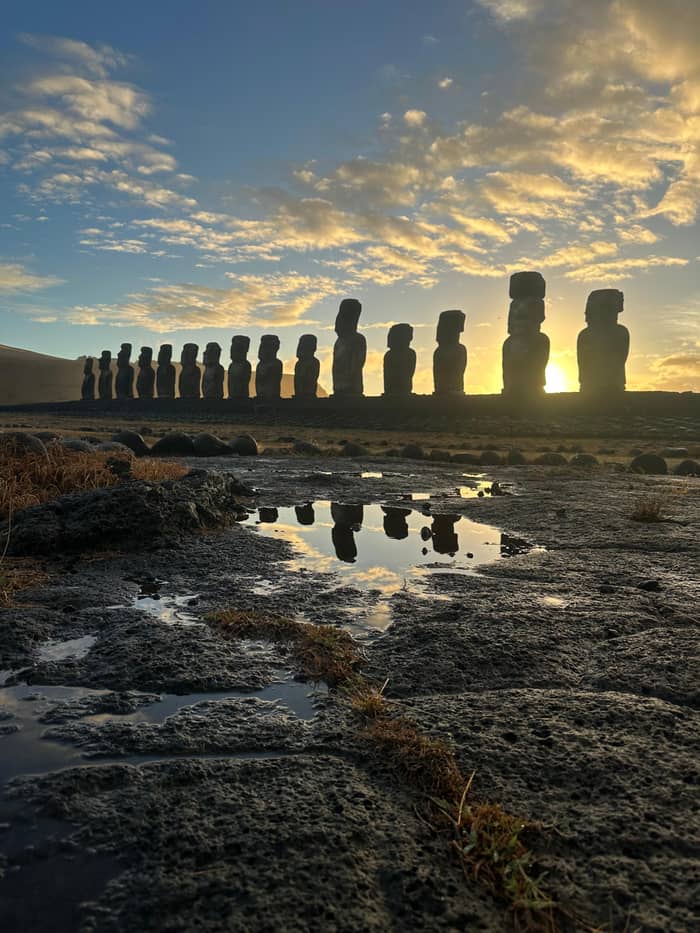
To the reef off Hanga Roa
- Length2.5 hours
- GroupUp to 7
- From$149
See your group's price
Compare all 3 options
Pick a trip and how many of you will dive for a starting total.
≈
View≈
View≈
ViewStarting prices on GetYourGuide, exchanged at the ECB reference rate. The booking page gives the exact price.
A moai on the sea floor sounds like a lost wonder. It is a replica placed for divers, and it sits in some of the clearest water in the Pacific, which is reason enough to go and see it.
Editorial team, easterislandtour.quest · Updated November 11, 2026 · Takes 7 min
The essentials
The underwater moai on Easter Island is not a sunken relic. Sernatur, Chile's national tourism service, describes it as a replica of a moai placed on the sea floor, one of the island's most famous dives and ideal for beginners.1 Its blog on activities is just as direct: the submerged moai is not real, it was installed so that travelers could visit it on their dives.2
Knowing that does not spoil the dive. The real moai stand on land, on their platforms and on the slopes of Rano Raraku, and they are protected so strictly that visitors may not even touch them.4 Underwater, the replica gives divers a moment that the land never can: a stone face looking up at you through blue water, with fish drifting past its brow.
The statue lies at the Arrecife de las Ancoras, the reef of the anchors, which Sernatur names among the most popular dive sites around the island.2 Its itinerary pages put the dive in Hanga Roa bay, the same stretch of coast where the town's harbors and dive centers sit.5 Most dive trips to the statue leave from the small harbors on the edge of town, so the boat ride out is short.
Sea options
| Trip | Length | From | Group |
|---|---|---|---|
| Guided dive, Hanga Piko | 2.5 hours | $149 | Up to 7 |
| Introductory dive | 2 hours | $190 | Instructor |
| Certified dive | 3 hours | $270 | Up to 10 |
| Reef snorkel | 3 hours | $110 | Private |
| Motu Nui boat trip | 2 hours | $450 | Private |
Lowest starting prices on GetYourGuide; the private trips take only your own party.
Divers come to Rapa Nui for the visibility. Sernatur says it reaches up to 60 meters, thanks to the island's remote position in the South Pacific, its volcanic formations and clear water.6 Its itinerary pages repeat the figure and call the island a world-class diving destination.5 For a diver used to murky coastal water, the first descent here can feel almost like flying.
The sea is also full of life you will not see anywhere else. Rapa Nui waters hold more than 700 animal species, including more than 100 species of fish found only in this region.7 Green turtles, honu in the Rapa Nui language, swim freely in the Hanga Roa cove among the traditional boats.8 A good instructor will point out the species that live only around this island, so ask before you descend.
For a first dive, that clarity changes everything. You see the outline of the moai from well above it, you see your buddy and your instructor at all times, and the blue around you feels open rather than dark. It is the reason the replica works so well as a beginner's dive, and why experienced divers still log it alongside the island's deeper walls.
Time in the water
Listed durations on GetYourGuide, including briefings and boat time.
Dive centers on the island sit mainly around the coves of Hanga Piko and Hanga Roa Otai, and they offer regular courses, beginner dives and guided trips with experienced divers.9 The dive sold on this page leaves from Hanga Piko and lasts 2.5 hours in all: a safety briefing of 30 minutes, a boat ride of 30 minutes out, 1 hour of scuba diving and 30 minutes back.
Groups are small, limited to 7 participants, with an instructor speaking English or Spanish. The meeting point is set and sent to you 48 hours before the start, so keep an eye on your messages once you have booked. The listing starts from $149; you pay nothing to reserve and can cancel for free until 24 hours ahead.
If you have never dived, look at an introductory dive. One listing offers 2 hours in the corals with an instructor in Spanish or English, from $190. Certified divers can book a 3-hour dive for no more than 10 people, from $270, which suits a second dive after the moai. Whichever you book, tell the center honestly how long ago your last dive was.
Which sea trip
Choose the line that matches your experience and wishes.
If I have never dived
An introductory dive
2 hours with an instructor in Spanish or English.
If I want to see the moai replica
The guided dive
Sernatur says the submerged moai suits beginner divers.1
If I am certified and want walls
The certified dive
A 3-hour dive with no more than 10 divers in the group.
If I prefer to stay at the surface
The reef snorkel
A guided 3 hours on the coral reefs, with pickup included.
If I want the Birdman islets
The Motu Nui boat trip
A private boat trip of 2 hours with snorkeling.
Ways into the water
Scuba
To the reef off Hanga Roa
Snorkel
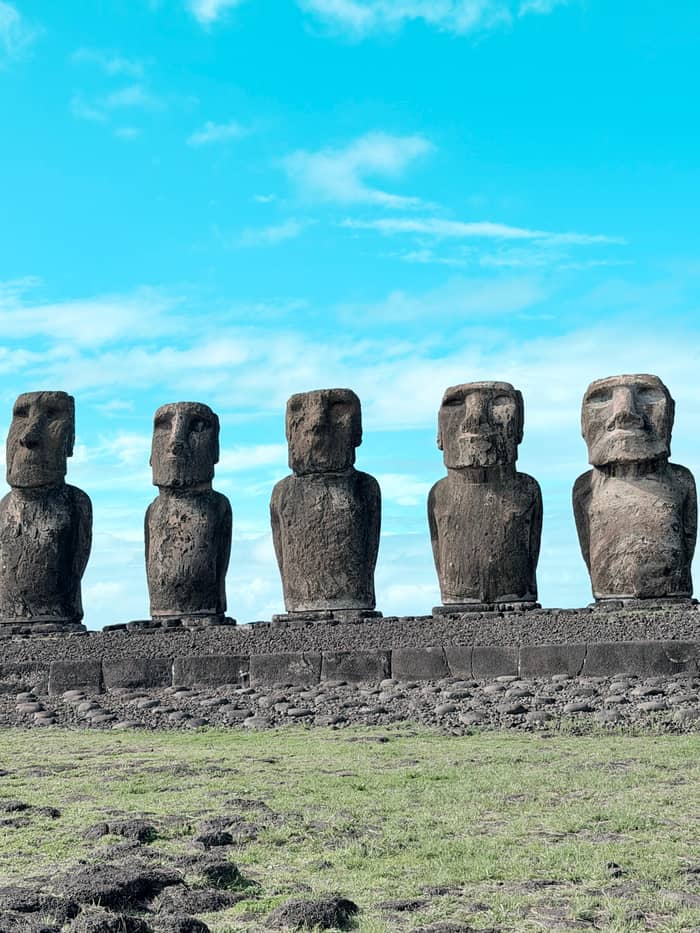
Coral reefs, with pickup
Boat
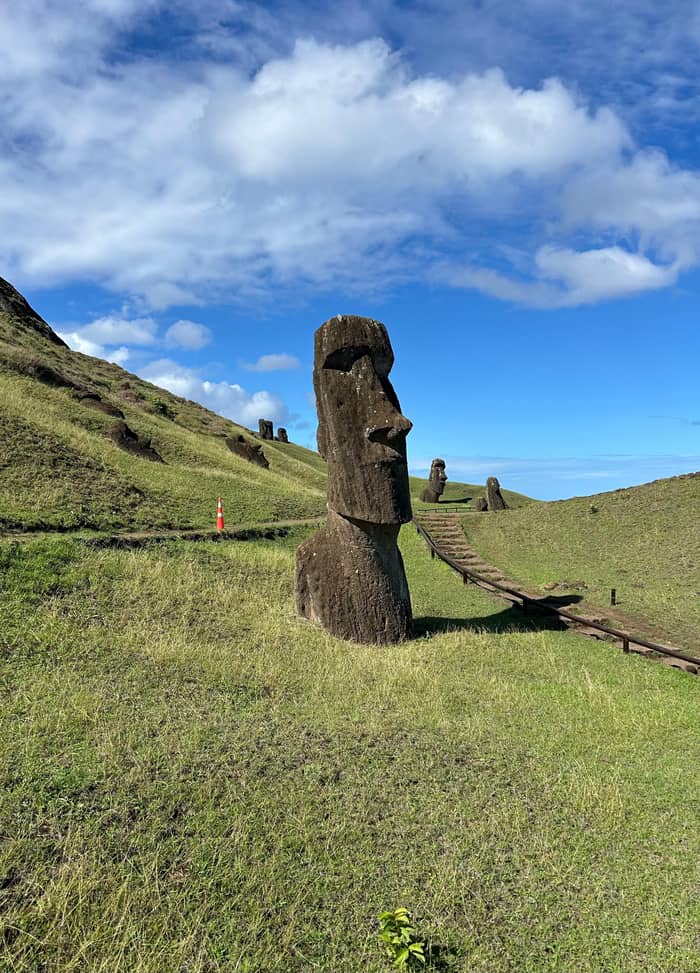
The Birdman islets
Not everyone wants a tank on their back. Sernatur suggests snorkeling at Anakena beach as the alternative to scuba in Hanga Roa bay.5 A guided snorkel trip on the coral reefs runs 3 hours, collects you from your lodging, speaks English, Spanish or Portuguese and is sold to private groups, from $110. Snorkeling also suits families and non-divers who want the color of the reef without any training.
An Easter Island boat tour takes you to the islets off the southwest tip. A private boat trip to Motu Nui with snorkeling lasts 2 hours with a guide in English or Spanish, from $450. Sernatur notes that these 3 islets near Orongo have coral walls up to 70 meters deep, with some of the best visibility around the island.10
Those islets are woven into the island's story too. On Rano Kau, the park explains, the old village of the Tangata Manu ceremonies looks straight out over Motu Nui and the smaller islets beside it.11 Seeing the motu from the sea after seeing them from the crater rim gives you both halves of the same landscape. For experienced divers, Sernatur also points to La Catedral, an underwater volcanic cave lit by natural light.12
Dive day
Day before
Sent to you 48 hours before the start.
Start
30 minutes with the instructor on land.
Out
30 minutes from Hanga Piko to the site.
Underwater
1 hour of scuba diving in a small group.
Back
30 minutes by boat to Hanga Piko.
Sernatur gives the water around Rapa Nui a range of 18°C to 26°C, warmest from December to March.3 That is pleasant for a swim, but an hour underwater still cools you, and you will appreciate a warm layer and a towel on the boat back. Bring a thin fleece or a windproof jacket even in summer, since the wind on the boat makes a wet body feel colder.
The warm months coincide with the island's busiest time. For Sernatur, the first quarter of the year means dry weather and the Tapati, the biggest cultural festival on Rapa Nui.13 If you plan to dive in those months, book early: the dive groups are small, and the island is at its busiest. The rest of the year is calmer on land, which has its own appeal for a diver who wants an empty boat.
Outside the warm season the water is cooler, but Sernatur ties its figure of up to 60 meters of visibility to the island's remote position and clear water rather than to any season.6 Ask the dive center about sea conditions a day ahead, since wind and swell decide each day's sites. A flexible plan, with a spare morning, is the best insurance against a choppy day.
Video
Blue Sea Corner on YouTube · The video only starts loading on your tap.
The submerged moai: one of the most famous dives, where you can explore a replica of a moai on the sea floor, ideal for beginner divers.
Dive checklist
The rules on land have an equivalent underwater. Sernatur reminds divers to keep a prudent distance from marine animals, and it is forbidden to feed or touch them.14 That applies to turtles in the harbor as much as to fish on the reef, and good instructors brief you on it before you enter the water. Watch the animals, give them space, and you will see far more of their natural behavior.
Protect the reef with what you put on your skin. Sernatur asks visitors to use biodegradable sunscreen to protect the coral.15 Coral around a volcanic island is precious, and a careless kick or a cloud of ordinary sunscreen harms the very reef you came to see. Pack a reef-safe sunscreen from home, since the choice on a remote island can be limited.
Treat the replica moai with the same respect you would show the real ones. It is a dive site, not a monument, but the reason it exists is the statues on land, which the park protects under Chile's monuments law.16 Hover above it, photograph it, and leave it exactly as you found it for the next diver. Your photographs will be better for it, too, since a sandy cloud kicked up from the floor ruins every shot.
Fit the dive around your tours on land. Our culture tour on land fills 8 hours, so a morning dive on a separate day is more relaxed. The meeting point for the dive reaches you 48 hours ahead, so you will know exactly where to be on the morning. Keeping land and sea on separate days also gives your legs a rest after a long walk around the quarry.
Leave a gap between your last dive and your flight home. Diving and flying too close together is a known risk for divers, and your dive center will advise the safe interval. With the only flights leaving for Santiago and the trip lasting about 5.5 hours, plan the dive early in your stay.17 Ask the dive center for its rule when you book, and fit the dive into the first half of your trip.
Finally, bring proof of certification if you have it, a mask that fits if you are particular, and patience with the weather. The dive sold here, like the other listings above, can be dropped without cost until a day before, a useful safety valve when the sea turns rough. With the details sorted, the moai on the sea floor becomes one of the calmest hours of the whole trip.
FAQ
Sernatur says it is not a real moai: it was installed so travelers could visit it on dives.2
Sernatur describes the submerged moai as ideal for beginner divers.1
The water is warmest from December to March, according to Sernatur.3
Sernatur gives visibility of up to 60 meters around the island.6
Briefing, boat ride, 1 hour of diving and the ride back from Hanga Piko.
Feeding or touching marine animals is forbidden; keep a prudent distance.14
Sources
More to read
Planning a day among the moai? Ask a real person here.