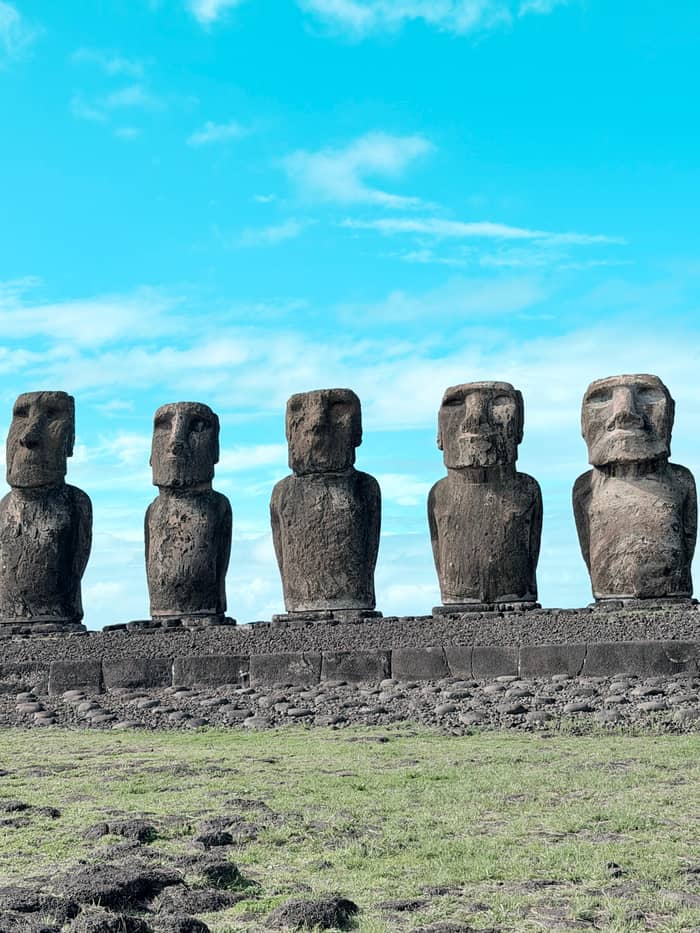
Before you fly
Online
The park's official site
- PaymentCard or transfer
- Limit6 per order
- TicketE-ticket with QR
Interactive to-do list
To-do list · 9 items
Tap items to tick them off. This device remembers your progress.
0 / 9 ready
That is everything. All that is left is picking your day on the island.
Reserve a spotThe park that holds the moai is run by the Rapa Nui people themselves. Here is what its ticket costs, where to buy it, why a guide is compulsory and which rules protect the statues.
Editorial team, easterislandtour.quest · Updated November 11, 2026 · Takes 7 min
The essentials
Rapa Nui National Park dates from 1935, it gained World Heritage status in 1995, and on November 23, 2017 its management passed to the Ma'u Henua indigenous community.6 Before the handover the Rapa Nui people were consulted, over 86% backed the transfer, and the community now holds the park on a concession of 50 years.6
The scale of that responsibility is easy to miss from a minibus window. The community explains that in March 2018 the State of Chile handed over the full administration of the park, which covers 43% of the island's territory, to the Rapa Nui people.7 Ma'u Henua was formed in August 2016 and describes itself as the largest indigenous organization in Chile.8
Ma'u Henua today numbers 2,500 members and employs 280 people, from rangers to conservation teams.9 When you visit Rapa Nui National Park, a UNESCO site, you are a guest on land that its own people manage as a living, ceremonial territory, and every rule below follows from that. The park's own word for the place is sacred land of the Rapa Nui people, and it asks visitors to treat it that way.10
Ticket table
| Pass | Age | Price | For |
|---|---|---|---|
| Foreign adult | 13 to 99 | CLP 95,000 | Visitors from abroad |
| Foreign child | 7 to 12 | CLP 38,000 | Visitors from abroad |
| National adult | 13 to 99 | CLP 40,000 | Chilean residents |
| National child | 7 to 12 | CLP 20,000 | Chilean residents |
Prices as listed on the park's official ticket platform; pay in pesos or the card equivalent.1
Every visitor needs a ticket of their own.14 The park's sales platform lists a Foreign Pass at CLP 95,000 for an adult aged 13 to 99 and CLP 38,000 for a child aged 7 to 12, and a National Pass for Chilean residents at CLP 40,000 for adults and CLP 20,000 for children.1 The amounts are in Chilean pesos; your card converts them when you pay.
Choose the right pass. The park warns that visitors who are not Chilean must select the ticket for foreigners, and that the wrong ticket may stop you at the entrance.12 The exception is a foreigner with permanent residence and a valid Chilean ID card, who may buy the national resident ticket and must show that document when buying or entering.15
The fee is not a tax that disappears into a distant budget. According to the park, the money from each ticket goes straight into conserving, maintaining and operating it.16 When you weigh it against a tour price, remember that it covers your whole stay rather than a single site, and that it supports the people who look after the moai every day.
Validity runs for 10 consecutive days, and the count begins when you walk into your first archaeological site.2 The park's answers to visitors make the same point from the other side: the 10 days start at your first entry, not on the date of purchase.21 Buying online weeks ahead therefore costs you nothing in validity.
Two sites carry a special rule. Rano Raraku, the quarry where the moai were carved, and Orongo, the ceremonial village on the rim of Rano Kau, can each be visited only once per ticket.3 Plan those visits as the center of their day, with a guide who gives them the time they deserve, rather than squeezing them in at the end of a long drive.
The ticket is personal and non-transferable, and you show it with your passport or ID card at each access point.2 The park's terms add that visitors must present it at every access control and be accompanied by a guide while respecting the rules.22 Keep it on your phone with a charged battery, or print it and keep the paper out of the sun.
Rules in practice
The park rules that matter most on a normal visit.
If I want a photo next to a moai
Keep your distance
Touching or leaning on moai and ahu is not allowed.5
If I want to drive myself
Hire a guide too
Main sites need an accredited local guide.18
If I brought a drone
Leave it in the room
Recreational drone use is banned in the park.19
If I want to camp near the moai
Camp in Hanga Roa
Camping is allowed only in the town of Hanga Roa.20
If I want to see Rano Raraku again
Buy a new ticket
Each ticket allows a single visit to Rano Raraku.3
Ways to buy
Before you fly
The park's official site
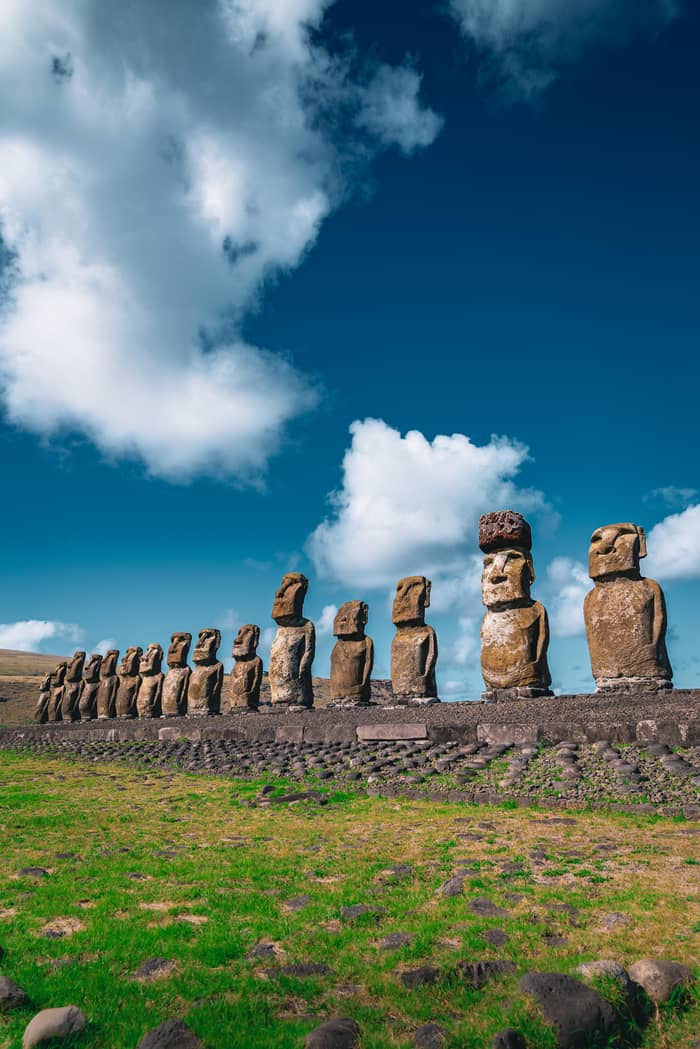
In town
Central Hanga Roa
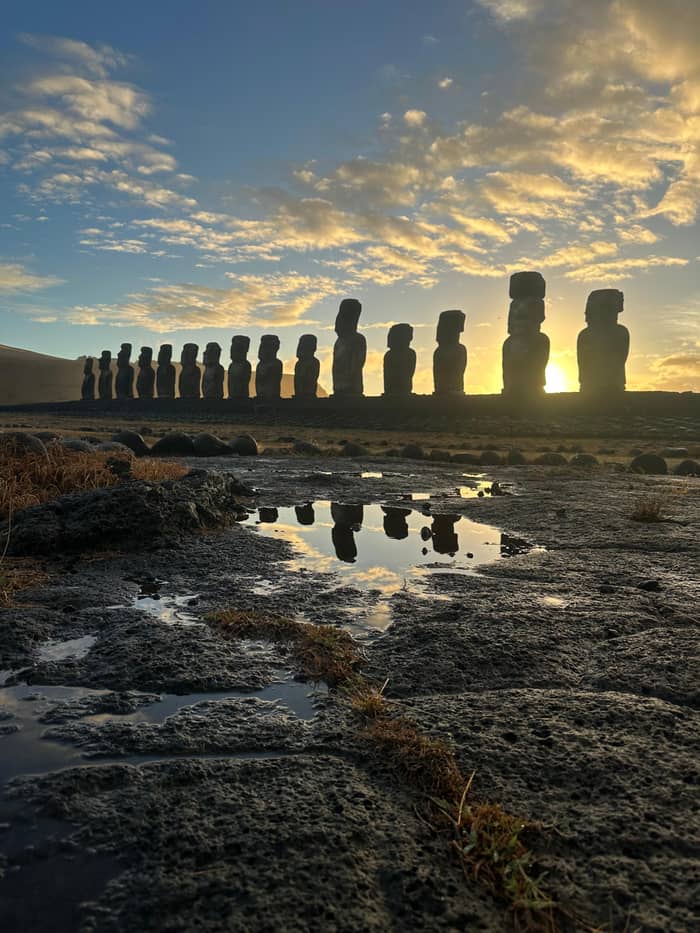
On landing
Mataveri airport
The park sells tickets online through its official site, at a ticket office in the middle of Hanga Roa, staffed Monday to Saturday from 09:00 to 17:30, and at ticket machines in the airport.23 Online, you can pay by debit or credit card, prepaid card or bank transfer.11 A single order holds at most 6 tickets, so larger groups place a second order.24
Refunds are not offered. Should your trip fall through, the money stays with the park, though you may amend the ticket and still use it inside one year.25 Date changes and purchase errors go through the park's citizen service office by email, with your proof of purchase.26 Write to it as soon as you know your plans have changed.
The practical advice is simple: buy the ticket once your flights are fixed, choose the foreign pass if you are not a Chilean resident, and arrive with it ready on the first morning of touring. If the online purchase fails, the park confirms that you can still buy at the airport machines or at the office in town after you land.23
A park day
Before you fly
Online by card, prepaid card or transfer.11
Choose
Non-Chileans must pick the foreigners' ticket.12
Morning
Entry from 09:00 after the rangers' checks.13
At each gate
Shown together at every access point.2
On site
No touching or leaning on moai and ahu.5
The park makes it mandatory to buy a ticket and to hire a guide accredited by Ma'u Henua to enter, and it applies that rule to every visitor, on a tour or not.4 Its visitor guide explains that the guide, or a Rapa Nui host, accompanies you for a richer, safer and more respectful visit and helps protect the archaeological remains.27 Sernatur puts the same rule in traveler's terms: you may rent a car or a bicycle, but you need a local guide to reach the main sites.18
The park publishes a register of its accredited guides, with 99 names and the languages each speaks, so you can hire one directly.17 A guided tour such as our culture day solves the rule in one booking: its guides lead the walks at Ahu Akahanga, Rano Raraku and Ahu Te Pito Kura, with the visit to Tongariki marked optional.
On the ground, the authority is the Muto'i Henua, the park's rangers, who guide visitors, guard the sites, enforce the rules and help in emergencies.28 They also check each site before it opens, and the park asks visitors to follow their instructions at all times.13 If something goes wrong at a site, they are the first people to turn to.
Video
World Wonders on YouTube · The video only starts loading on your tap.
Observe the mōai and ahu from the permitted distance, without touching or leaning on them. Do not move or remove stones or archaeological objects.
Can you touch the moai on Easter Island? No. The park wants the moai and ahu admired from the marked distance, with no hands or shoulders resting on them, and no stone or artifact picked up or carried off.5 Its answers to visitors go further: touching, climbing, sitting on, leaning on or walking over moai, ahu, petroglyphs or other structures is strictly forbidden.29
The reason is not only fragility. The statues are ancestors, and the platforms are the ceremonial heart of the clans that raised them. Stay on the marked trails and viewing areas, and leave the rocks free of graffiti or scratches.30 Photographs are welcome; a hand on a moai for a photograph is not. A good guide will show you the angle that gets the statue and the sky without stepping past the rope, and that photograph is the better one anyway.
The rules carry real penalties. Breaking them can bring fines of 5 to 100 UTM, Chile's monthly tax unit, under Law 17.288 on national monuments, depending on how serious the offense is.31 The park's visitor guide adds that damage to the heritage is punished with fines and prison sentences under the same law, so a careless moment can turn into a court case far from home.32
Drones are banned in the park for recreational or tourist use, whether professional or home-made, and flights for research or filming need written permission first.19 Commercial filming and photography also need a permit, and alcohol and smoking are not allowed inside the park.33 Pets are not allowed either, while service dogs are admitted when the park has been sent the visit date and the dog's papers beforehand.34,35
Fire is a particular danger. Wind and parched grass put the whole island at risk of wildfire, the park warns, so fires and smoking are banned outright.36 Camping is allowed only in Hanga Roa, the park has no camping areas, and visitors are asked to take their rubbish back to Hanga Roa.20,37 If a rule is unclear on the day, ask the rangers at the site: they would far rather explain it than enforce it.
Site entry starts at 09:00, once the rangers have checked that each site is safe to open, and each site's status is published daily on the park's channels, including a WhatsApp channel.13,38 A site can be open, open with caution or closed for a while because of weather, ground, maintenance or safety, and Orongo is kept under constant wind assessment near the rim of Rano Kau.39,40 Only Orongo, Rano Raraku, Anakena and Ahu Akivi have public toilets, and the park recommends comfortable shoes and clothes.41,42
FAQ
Children from abroad aged 7 to 12 pay CLP 38,000; the cheaper national pass is for Chilean residents only.1
Counted from your first site, not from the date you bought it.21
Rano Raraku and Orongo can each be visited only once per ticket.3
Ma'u Henua admits no one without its ticket and one of its accredited guides.4
Buy it from machines at the airport or at the office in town, which keeps hours of 09:00 to 17:30 from Monday to Saturday.23
Drones are banned for recreational or tourist use in the park.19
Fines under Law No. 17.288 depend on how serious the offense is.31
Created in 1935, the park joined the World Heritage list in 1995.6
Sources
More to read
Planning a day among the moai? Ask a real person here.